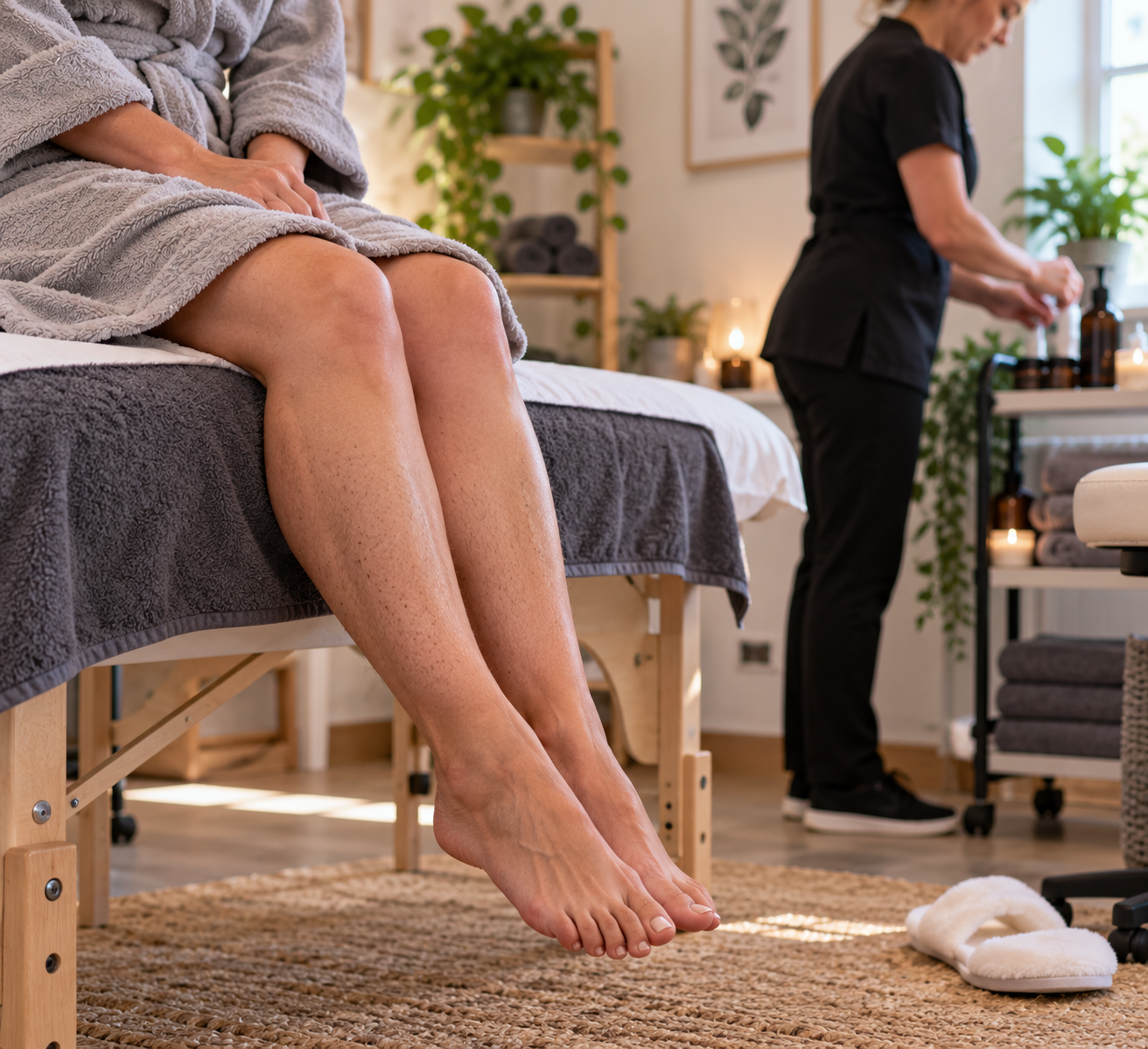
“I’m so sorry, I didn’t shave my legs.”
If you’ve worked as a massage therapist for any length of time, you’ve probably heard this.
Usually while the client looks genuinely mortified.
Closely followed by one of its relatives:
“Sorry about my feet.”
“Excuse my stretch marks.”
“I’ve put so much weight on.”
“My skin is awful at the moment.”
“I’m sorry, I haven’t had my toenails done.”
Sometimes clients spend the first five minutes of a treatment apologising for possessing a perfectly ordinary human body.
So perhaps it’s worth saying this clearly:
You really don’t need to.
Your therapist is not inspecting you
When a therapist looks at your leg, they’re probably thinking about things such as positioning, pressure, treatment area, comfort and draping.
They are not thinking:
Good grief. She hasn’t shaved since Thursday.
Body hair is normal.
So are scars.
Stretch marks.
Cellulite.
Dry skin.
Loose skin.
Birthmarks.
Different body shapes.
Different-sized breasts.
Bony bits.
Squishy bits.
Wrinkles.
Veins.
Hair in places social media has apparently decided hair shouldn’t exist.
Human beings come with all sorts of features.
Therapists know this.
We see real bodies
One slightly strange thing about training as a therapist is that you very quickly realise how unrealistic many of the bodies we see in advertising actually are.
Real bodies aren’t airbrushed.
They’re asymmetrical.
They have marks.
They change with age.
They change after pregnancy.
They change after illness.
They change when people gain or lose weight.
They change through menopause.
They have scars from operations and injuries and life.
Once you’ve worked with lots of clients, most of this becomes completely unremarkable.
Not because therapists stop seeing the person.
Because we stop expecting bodies to look like photographs in skincare adverts.
Please don’t shave especially for us
If you normally shave and want to, that’s entirely your choice.
But you don’t need to shave because you’re having a massage.
In fact, shaving immediately before a treatment can sometimes leave skin feeling sensitive or irritated.
Your therapist isn’t bothered by your leg hair.
We promise.
We’ve managed to massage through it before.
“But my feet are horrible”
Reflexologists and therapists working with feet hear this constantly.
Sometimes the client barely has their socks off before the apology begins.
Feet are feet.
They’re designed to spend an impressive amount of time trapped inside shoes, carrying us around.
They don’t need to arrive freshly pedicured and ready for a sandal advert.
Obviously, if there is something affecting the skin or nails that could influence whether treatment is appropriate, your therapist may need to look at it or ask questions.
That’s a professional assessment.
It isn’t judgement.
There’s a considerable difference between:
“I need to check whether it’s appropriate to treat this area.”
and:
“I am appalled by your toenail.”
Hopefully your therapist is firmly in the first camp.
Weight is another big one
Clients sometimes apologise for gaining weight before they’ve even climbed onto the couch.
Or they make jokes about themselves.
“There’s plenty for you to work with!”
“I’ve really let myself go.”
“I bet I’m your biggest client.”
As therapists, we need to be thoughtful about how we respond.
We don’t need to agree with negative comments.
And we don’t necessarily need to launch into an enthusiastic speech about how wonderful their body is either.
Sometimes a simple:
“You don’t need to apologise at all. Let’s just make sure you’re comfortable.”
is enough.
Because comfort and dignity are what matter.
Therapists aren’t perfect specimens either
This may come as shocking news.
Therapists also have cellulite.
And body hair.
And scars.
And wobbly bits.
And ageing skin.
Some have disabilities.
Some live with chronic health conditions.
Some are going through menopause.
Some have gained weight.
Some have lost weight.
Some occasionally discover halfway through the working day that their own legs could have done with moisturiser.
We’re people too.
Good draping matters
Part of helping clients feel comfortable is good professional draping.
Clients shouldn’t feel unnecessarily exposed during treatment.
Only the area being worked on needs to be accessible, and towels or coverings should be used appropriately to maintain warmth, comfort and dignity.
This becomes especially important when somebody already feels self-conscious about their body.
A therapist who is calm, confident and professional can make an enormous difference to how safe someone feels.
Be careful with compliments too
This is an interesting one.
We often think compliments are always positive.
But comments about a client’s body can occasionally make them more self-conscious.
“You’ve lost loads of weight!”
“Your legs are so slim!”
“You look amazing for your age!”
“You’ve got hardly any cellulite!”
All meant kindly.
But we don’t necessarily know what’s happening in that person’s life.
Weight loss isn’t always intentional.
Body image can be complicated.
Health conditions can change appearance.
And some people simply don’t want their body evaluated — positively or negatively — while they’re lying in their underwear on a treatment couch.
You can be warm and friendly without reviewing their physique.
What therapists do need to notice
There are, of course, things we’re professionally interested in.
Skin changes.
Bruising.
Swelling.
Injuries.
Areas of tenderness.
Changes a client reports since their last treatment.
Anything that may affect treatment safety.
That’s part of being a responsible therapist.
But noticing something clinically relevant isn’t the same as judging someone’s appearance.
The treatment room should feel safe
For some clients, undressing for a treatment is no big deal.
For others, it takes courage.
Body image difficulties, previous experiences, cultural expectations, sensory sensitivities, gender, ageing, surgery and countless other factors can affect how somebody feels about being touched or partially undressed.
We don’t necessarily know their story.
So our job isn’t to tell people how they should feel about their body.
It’s to create an environment where they don’t feel judged for it.
And sometimes that starts with the smallest interaction.
“Sorry, I haven’t shaved my legs.”
“You really don’t need to apologise.”
Then carry on.
No fuss.
No inspection.
No dramatic reassurance.
Just professional treatment of another perfectly ordinary human body.
Because your client hasn’t come in for a leg-hair assessment.
They’ve come in for a massage.